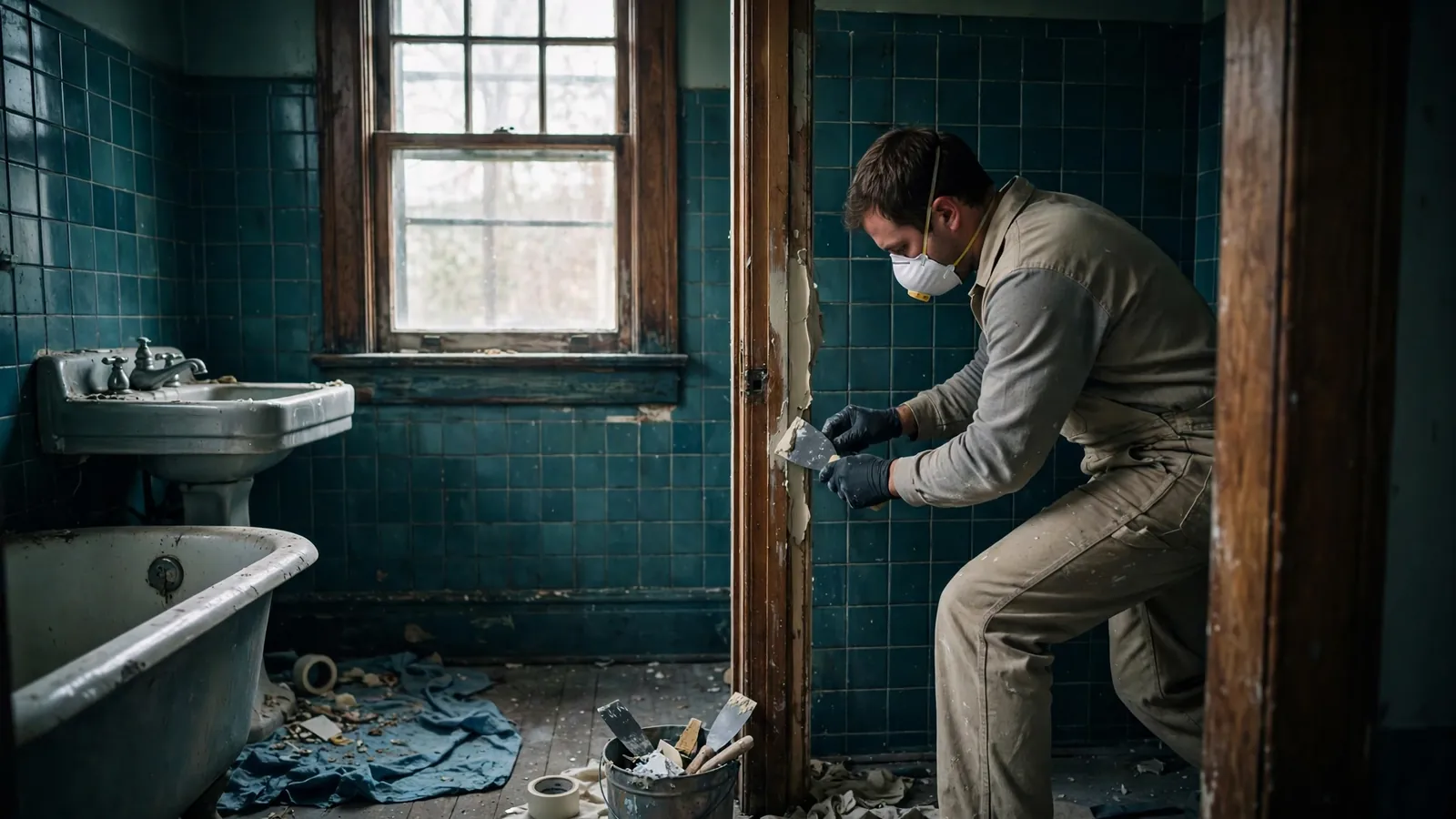
Most Worcester bathrooms sit inside homes built before 1978 — and homes built before 1978 are the homes the federal lead-paint rule was written for. Three quarters of Worcester's homes were built before 1980, and the median home in the city was built in 1951. A bathroom remodel in one of those homes disturbs painted walls, and disturbing painted walls in a pre-1978 home is work the EPA's Renovation, Repair and Painting Rule covers.
The rule is straightforward in plain language. Firms paid to disturb paint in pre-1978 housing must be certified and follow lead-safe work practices, and the homeowner must receive the EPA's Renovate Right pamphlet before the work starts. The rule has a minor-repair exception for very small areas of paint, and it prohibits a short list of practices — open-flame burning and power sanding without a HEPA vacuum among them. The rest of this guide works through each of those points the way a Worcester homeowner will meet them.
The rule does not stop a remodel. It changes how the work is done: the painted surfaces are tested or treated as if they contain lead, the work area is contained, the dust is controlled, and the room is cleaned and checked when the work is done. A homeowner who knows the rule before work starts can ask the right questions on the call — and a provider who follows it can say so plainly.
TL;DR
Problem: Most Worcester homes were built before 1978, and a bathroom remodel disturbs painted walls — work the EPA's RRP Rule covers.
Solution: The firm doing the work must be certified and follow lead-safe practices, the homeowner must receive the Renovate Right pamphlet before work starts, and a short list of practices is prohibited.
When to call: Before work starts — describe the age of the home and ask about lead-safe work practices on the call, so the plan covers them from the start.
Why Worcester homes trigger the rule
The EPA's RRP Rule covers housing built before 1978, and Worcester is a city of pre-1978 housing. Three quarters of the city's homes were built before 1980, and the median home was built in 1951 — which means most bathroom remodels in Worcester touch walls painted before lead paint was banned. The rule applies to firms paid to disturb paint in those homes, and a bathroom remodel disturbs paint: walls come down, tile comes off, trim is removed, and the painted surfaces behind them are exposed. A remodel in a home built after 1978 does not trigger the rule; a remodel in a home built before 1978 does, and the plan should say so before work starts.
The EPA RRP Rule in plain language
The Renovation, Repair and Painting Rule, published by the U.S. Environmental Protection Agency, sets the practices for work that disturbs paint in pre-1978 housing. A firm paid to do that work must be certified, and the people doing the work must follow lead-safe practices: the work area is contained so dust does not travel, the painted surfaces are worked wet or with HEPA vacuum equipment, and the room is cleaned when the work is done. The rule is a work-practices rule — it tells the firm how to do the work, not whether the work can be done. A bathroom remodel in a pre-1978 home is not blocked by the rule; it is done under it.
The Renovate Right pamphlet
Before work starts, the homeowner must receive the EPA's Renovate Right pamphlet — a plain-language guide that explains what lead paint is, where it is found, and what lead-safe work looks like. The pamphlet is given before the work, not after it, because its purpose is to let the homeowner ask questions while the plan can still change. If no pamphlet has been offered by the time work is about to start, ask for it on the call. It is the homeowner's copy of the rule, in the homeowner's language.
The minor-repair exception
The rule has a minor-repair exception: work that disturbs six square feet or less of interior paint per room is not covered, and neither is work that disturbs a small area of exterior paint. The exception has limits that matter for a bathroom: window replacement is always covered, whatever its size, and demolition of painted surfaces is always covered. A bathroom remodel that takes walls down is demolition, and demolition is covered — so a full remodel in a pre-1978 home does not fall under the exception, whatever its size. A small repair that disturbs a few square feet of paint may fall under it, and the visit says which side of the line the work falls on.
Prohibited practices
The rule prohibits a short list of practices on painted surfaces in pre-1978 homes. Open-flame burning of paint is prohibited. Power sanding, grinding, planing, needle guns and blasting without a HEPA vacuum attachment are prohibited. Heat guns that char paint are prohibited. The list is short because the practices on it are the ones that throw the most lead dust into the air — and lead dust is the hazard the rule exists to control. A provider who follows the rule will not use those practices, and a homeowner who knows the list can ask about them by name.
What to ask any provider
Three questions cover the rule on the call. First, is the firm certified to do lead-safe work in pre-1978 homes. Second, will the homeowner receive the Renovate Right pamphlet before work starts. Third, how will the work area be contained and cleaned — what happens to the dust, and how is the room checked when the work is done. The answers should be plain and direct. A provider who follows the rule answers them without hesitation; a provider who has not thought about the rule is a provider the homeowner should think twice about. The pamphlet is the homeowner's way of checking the answers: it describes the same practices the provider should describe, in the same plain language, so a homeowner who has read it can tell whether the provider's plan matches the rule. Keep the pamphlet with the contract, and keep both where they can be found when the work starts — the plan, the pamphlet, and the contract are the three papers that describe the job, and each one should agree with the other two.
Steps
Note the age of the home
If the home was built before 1978, the RRP Rule applies to work that disturbs paint. Say the age of the home on the call.
Ask for the pamphlet
The Renovate Right pamphlet is given before work starts. Ask for it on the call, and read it before the plan is agreed.
Ask about certification
Ask whether the firm is certified to do lead-safe work in pre-1978 homes, and how the work area will be contained.
Plan the containment
The work area is contained so dust does not travel, the painted surfaces are worked wet or with HEPA vacuum equipment, and the room is cleaned when the work is done.
Agree the scope in writing
The plan covers which painted surfaces will be disturbed, how they will be handled, and what happens to the dust — before demolition, not during it.
Check the room when the work is done
The room is cleaned and checked when the work is done, and the homeowner sees the result before the job is called done.