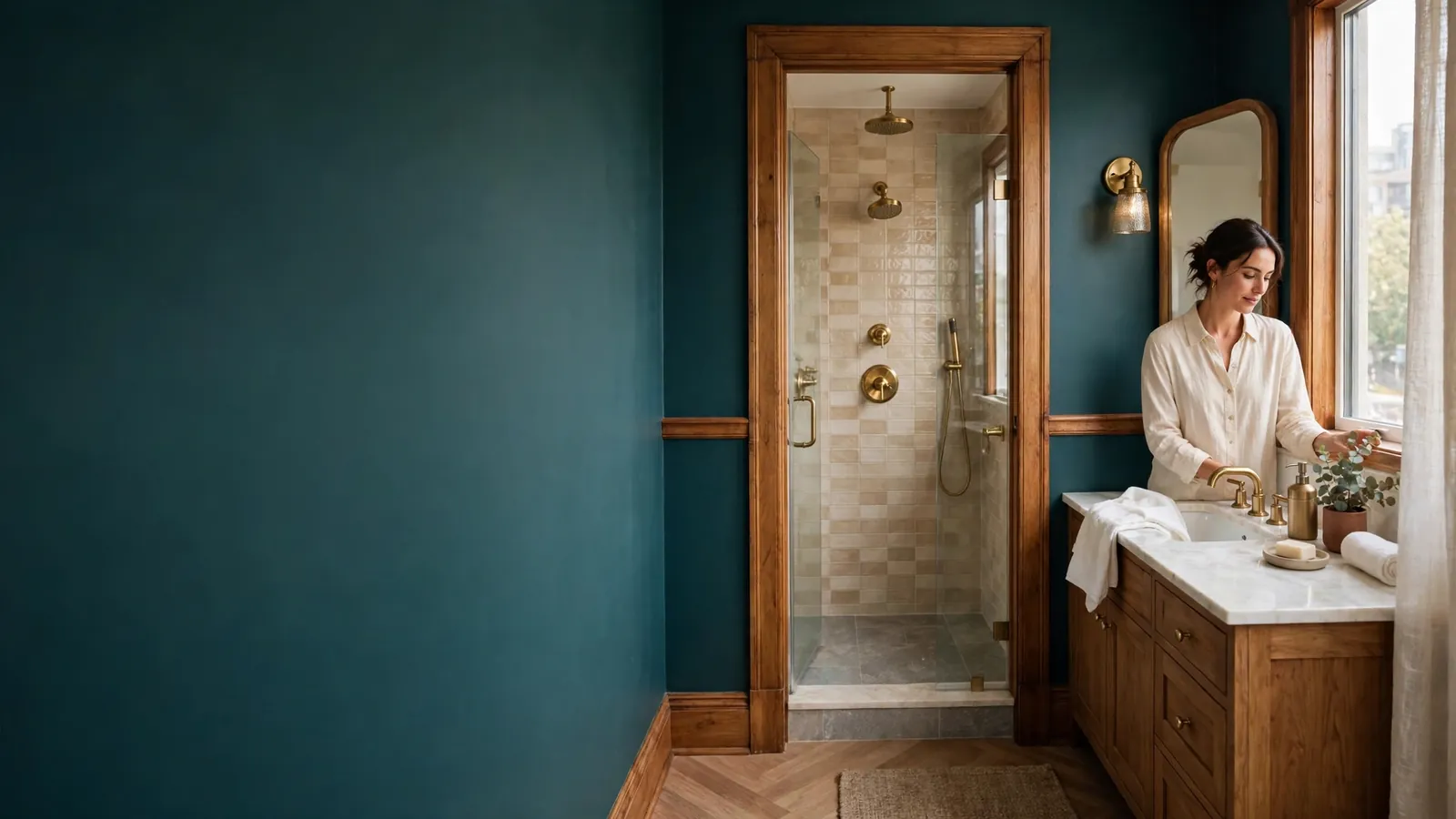
Bathroom Remodeling for Condos and Townhouses in Worcester, MA
A condo bathroom has two owners: the person who lives in it and the building that surrounds it. The walls are shared, the plumbing is shared, and the water that leaves one bathroom can arrive in the unit below. This page is for condo and townhouse owners in Worcester County — and for the boards that approve their work.
Call Now
Describe what your bathroom is doing and where you are — a local bathroom remodeling professional is connected from there.
Call NowMon–Fri 7:00 AM–10:00 PM ET · Sat 8:00 AM–10:00 PM ET · Sun 7:00 AM–9:00 PM ET
Bathroom remodeling for condos and townhouses in Worcester
Worcester County's condos and townhouses are often conversions — mill-era multi-family buildings in Fitchburg, Gardner, Webster, Clinton and Leominster divided into units, and three-deckers in Worcester itself sold flat by flat. The bathrooms in those buildings were built as one system and divided later, which means the walls between units and the stack that serves them are still shared, whatever the deeds say.
That changes the job. A bathroom in a single-family home is a room with four walls and a floor. A bathroom in a condo is a room whose walls are shared with a neighbour, whose waste line is shared with the units above and below, and whose work hours are set by a board. The visit for a condo bathroom reads the building as well as the room — the walls between units, the stack, and the ceiling of the room below.
The first step in a condo remodel is not demolition. It is a question to the board: what needs approval, what hours the work can run, and what the building's rules say about plumbing changes, noise, and access to shared areas. The answers shape the plan before any tile comes off, and they are answers only the board can give.
Before the visit
Note what each bathroom is doing — what leaks, what smells, what is stained or soft — and whether the building has stacked bathrooms or shared walls. The signs you have seen shape what the visit brings.
Board approval and work-hours rules
Before any work is planned, ask the board what needs approval. The questions to ask are plain: does the board need to approve the scope in writing, are there hours when noisy work cannot run, are there rules about plumbing changes that touch a shared stack, and does the building need notice before work starts. The answers are set by the building's own documents, and they differ from one building to the next — a converted mill building in Fitchburg and a townhouse row in Westborough do not run on the same rules. The visit cannot answer these questions for the board; the board answers them, and the plan is built around the answers. Bring the board's answers to the call, and the visit is planned around them. The board's answers also decide the order of the work. A building that allows noisy work only on certain days needs the demolition planned around those days; a building that needs notice before work starts needs the notice given before the plan is agreed. The visit is sequenced around the board's rules the way it is sequenced around the room's problems — the rules first, the work second, and no step started before its permission is in hand.
Shared walls and shared plumbing
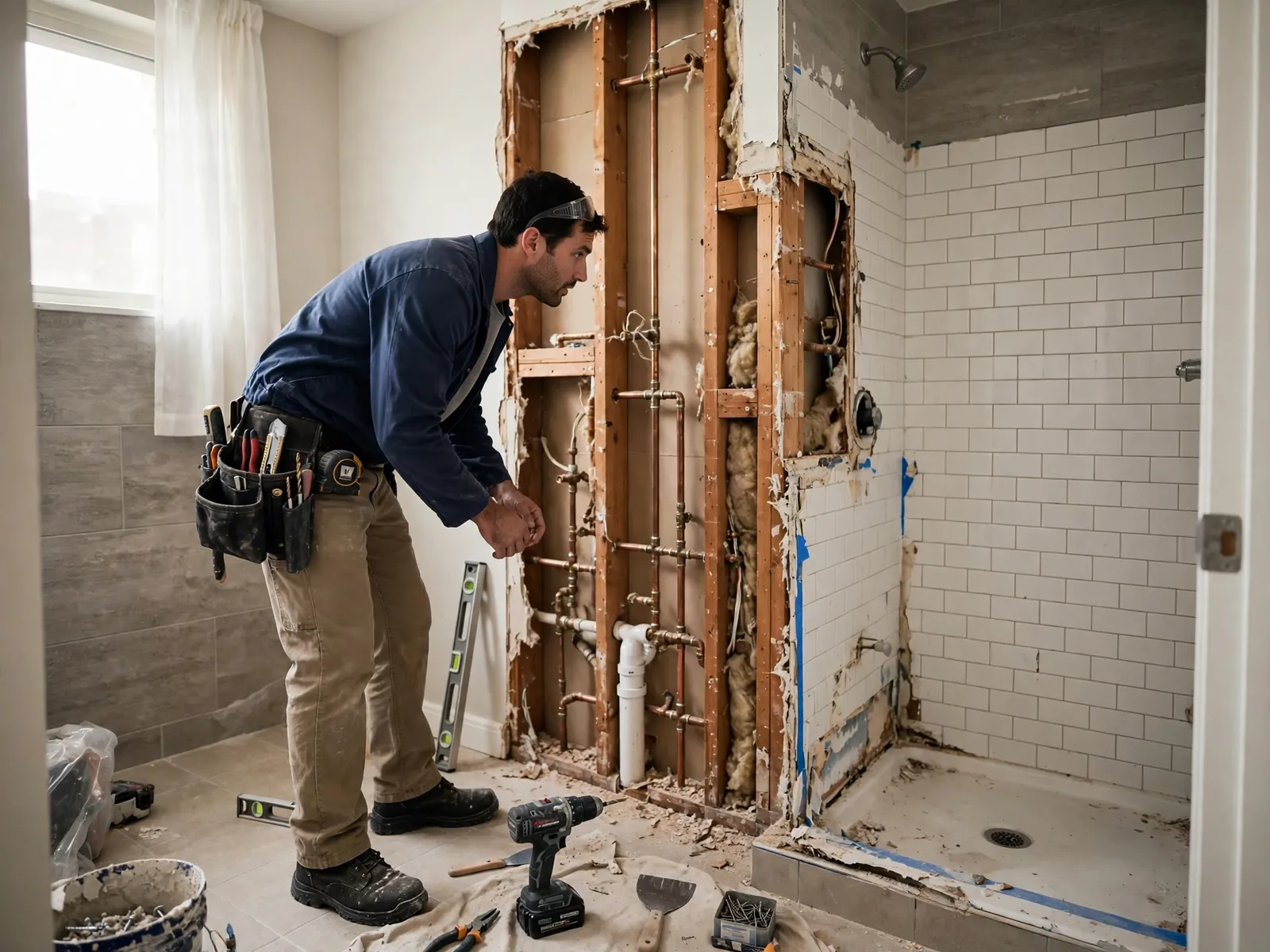
Water does not respect the line between units. A leak in an upstairs condo travels along the wood and the pipe and arrives as a stain on the ceiling of the unit below, sometimes feet from the bathroom above it. The stain's place points to the source — a valve behind the wall, a pan that holds water, a drain collar that was never clamped — but only if the walls between units are read as part of the job. The visit for a condo bathroom looks at the wall the bathroom shares with its neighbour, the stack that serves the units above and below, and the ceiling of the room below, because the problem rarely lives in one unit alone. A fix that seals one unit's grout and leaves the shared wall wet is a fix that will be called back.
What the inspection covers beyond your unit
The inspection for a condo bathroom covers the room, the subfloor, the wall behind the shower, the valve behind the trim plate, and the ceiling of the room below — and then it goes further, to the walls between units and the stack that connects them. The reason is simple: the bathroom's plumbing is part of the building's plumbing, and a failure in the stack shows up in more than one unit. The visit reads the shared parts first, because a problem in the stack is a building problem, and a problem in the room is a room problem, and the two are fixed in different ways.
Second-floor bathrooms
Second-floor bathrooms are the norm in Worcester's three-deckers and in the mill-era buildings that became condos, and they are the bathrooms where a leak's history is written most clearly — on the ceiling of the room below. A stain that grows after long showers points to the pan; a stain that grows when the tub is filled points to the drain or the overflow; a stain that is always there points to a valve or a waste line that leaks all the time. The visit reads the ceiling below before it reads the bathroom above, because the ceiling tells the story the bathroom hides.
The only-tub question in a condo
A condo with one bathroom and no tub is a condo that narrows its own buyer pool. Families with young children and pet owners look elsewhere when there is no tub anywhere in the home, and a shower-only condo asks every buyer with a small child to bathe standing up. Keeping at least one tub in the home is the sounder call for a condo that may be sold — and where the only bathroom lost its tub to an earlier conversion, a shower-to-tub conversion puts one back. The visit talks the only-tub question through before demolition, because it is a decision that is cheap to make early and dear to reverse later.
Frequently asked questions
Straight answers to the questions Worcester homeowners ask most.
Ask whether the scope needs approval in writing, what hours noisy work can run, whether plumbing changes that touch a shared stack need separate approval, and whether the building needs notice before work starts. The answers are set by the building's own documents and differ from one building to the next. Bring the board's answers to the call, and the visit is planned around them.
That is set by the condo's own documents and the board, not by this site — and it is the first question to put to the board, not the last. What the visit does is trace the water: the stain's place and timing point to the source, and the inspection reads the walls between units and the shared stack to find which part failed. Bring the board's answer about responsibility to the call, and the plan is built around it.
Water travels along wood and pipe. A leak in an upstairs bathroom follows the framing and the waste line down to the room below, and the stain can appear feet from the bathroom above it. The stain's place and timing point to the source — a pan that holds water, a valve behind the wall, a drain collar that was never clamped. The visit reads the ceiling below before it reads the bathroom above.
That is set by each building's own rules, and it differs from one building to the next — a converted mill building and a townhouse row do not run on the same hours. Ask the board what hours noisy work can run and whether the building needs notice before work starts. The visit is planned around the board's answer, and the plan covers the hours as well as the scope.
The work happens in your bathroom, but the inspection reads the room below — the ceiling below is where a leak's history is written, and the visit needs to see it. Whether the unit below is disturbed during the work depends on what the inspection finds: a pan that failed needs the floor opened in your bathroom, not in the room below. The visit explains what the unit below will and will not see before work starts.
The walls between units, the stack that serves the units above and below, and the ceiling of the room below — as well as the room itself, the subfloor, the wall behind the shower, and the valve behind the trim plate. The bathroom's plumbing is part of the building's plumbing, and a failure in the stack shows up in more than one unit. The visit reads the shared parts first, because a problem in the stack and a problem in the room are fixed in different ways.
Yes, if the condo may ever be sold. A home with no tub anywhere narrows the buyer pool — families with young children and pet owners look elsewhere. Keeping one tub keeps those buyers in the pool. Where the only bathroom lost its tub to an earlier conversion, a shower-to-tub conversion puts one back in the same footprint.
They change what the inspection reads and what the work can touch. A wall shared with a neighbour cannot be opened the way a wall in a single-family home can, and a leak behind a shared wall is read from both sides — your bathroom and the room it shares the wall with. The visit reads the shared walls as part of the job, and the plan covers what can and cannot be changed in them.
The visit finds that out by reading the stack — the rooms above and below, the waste line that connects them, and the stains that point to the source. A problem in the stack is a building problem, and it is fixed differently from a problem in one room. The inspection says plainly whether the failure sits in your bathroom or in the shared stack, and the plan follows that finding. The board is the one to talk to about shared-stack work.
Sometimes. A wet-area rebuild can be done while the dry side of the room stays, and a conversion can be done while the rest of the bathroom waits — but a bathroom that has three problems needs the same walls opened three times if the problems are fixed one at a time. The visit counts the problems with you and says plainly whether stages will save work or repeat it.
The city, the building, the floor your unit is on, what the bathroom is doing — what leaks, what smells, what is stained or soft — and what the board has said about approval and work hours. Say whether the bathroom is on the second floor and whether the unit below has a stain. The visit is arranged from that description, and the inspection reads the walls between units and the stack as well as the room itself.
Bathroom work for condos and townhouses in Worcester?
Call now — we will connect you with an independent local provider for an inspection and a clear plan for condos and townhouses.
Call NowTalk to a local bathroom remodeling professional
One call connects you with a local professional for Worcester and nearby towns. Describe what your bathroom is doing — what leaks, what smells, what is stained or soft — and the visit is arranged from there.
Mon–Fri 7:00 AM–10:00 PM ET · Sat 8:00 AM–10:00 PM ET · Sun 7:00 AM–9:00 PM ET
Service area
Worcester, MA · Shrewsbury, MA · Leominster, MA · Fitchburg, MA · Milford, MA · Westborough, MA · Gardner, MA · Auburn, MA · Webster, MA · Clinton, MA
Worcester Bathroom Remodeling Pros is a referral service connecting customers with local bathroom remodeling professionals; it is not itself the service company.